
The 6 core drawing skills
that boost your creativity and help you
avoid years of struggle.
These 6 core drawing skills create the foundation for successful art.
Whether you’re planning to do a simple sketch, a masterful drawing or taking the first step in painting your subject, you want your subject to look right.
When you learn to correctly draw your subject, you gain the skill and confidence to tackle almost any subject you want. That skill and confidence give you the courage to release more and more of your creativity.
And feel proud of the result.
Learning these 6 core drawing skills won’t happen overnight. But it can be a very fun and rewarding journey when you accept that it’s a journey of steady growth and improvement, not the swish of a magic wand and you’re an artist.
When you approach your journey in that way, you will gradually learn these core drawing skills and be able to express yourself better and better in your art.
And my weekly newsletter, based on my 40+ years of art experience, will help you do that and avoid the potholes in your journey.
Emails you will WANT to read... what real subscribers say:
“I just had to send you an email to let you know that I am so fortunate, and happy that I subscribed.to your newsletter!! L.M.
“It is ALWAYS a pleasure reading your articles. Thanks so much! A.S.
“You are a wonderful coach. Ray Braun
 |
With that in mind, let’s dive into these core drawing skills - what I call the six S’s of drawing. The absolute fundamentals for creating good art.
First, learn to really See
By this I mean four things.
1. See ideas for art all around you.
In my beginning years I couldn’t see the art ideas around me. Instead, I would spend hours searching through my photographs looking for one photo that would inspire me to draw or paint what was in it.
I wrongly assumed that good art depended on having a good photograph of a great subject.
It took me years to finally realize the best and most satisfying art comes from inside you. The subject is less important than how you decide to depict it. Almost anything can be made interesting by how you choose to draw or paint it.
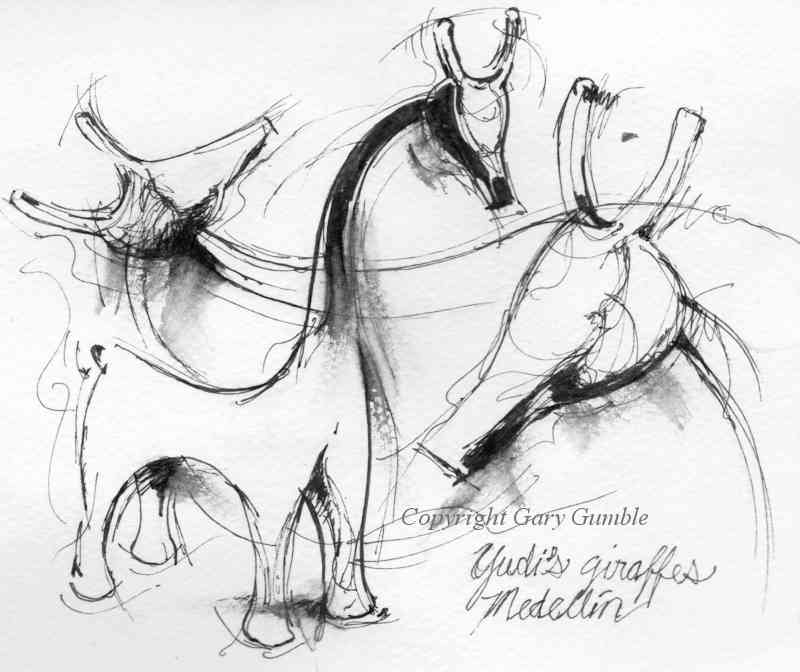
As an example of what I mean, this drawing is my interpretation of a dorky, little giraffe sculpture that was parked in an apartment my wife and I rented in Medellín, Colombia.
What makes the drawing interesting and fun is the design I created and the playfulness in the lines and tones. Not whether it’s a completely accurate depiction of this little sculpture.
To learn more about finding subjects for art all around you, check out Art painting ideas: Make the ordinary interesting (www.beginningartist.com/art-painting-ideas.html √ or (more to come here)
2. See with your imagination.
This is where the element of fun fits into your core drawing skills - seeing the world as you would like it to be. When you do that, you realize even something dull can be changed to become an interesting drawing.
The big problem is it’s so easy to get hooked on only drawing what you see in real life or in your reference photograph. With all its boring details.
I did that in my beginning years. But, in the 40+ years since then, I've learned the most expressive art happens when you add your imagination to it.
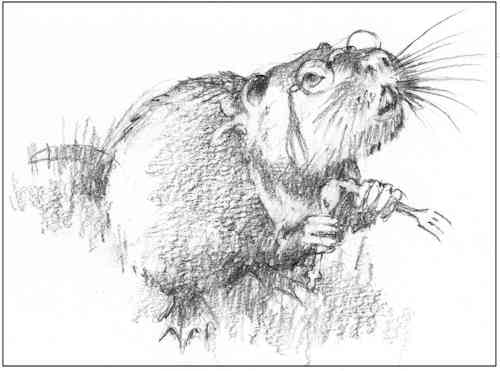
Doing that can be as simple as drawing glasses, a bib and eating utensils on a nutria – just because you thought it would be fun.
As you do more and more simple drawings like this, you can gradually build not only your imagination but also your confidence and your drawing skills.
That’s a great path to learning how to draw anything you would ever want – one small step at a time.
With practice you can feel confident enough to challenge more of your imagination.
This is a drawing I started just to challenge the figure drawing skill I’ve developed over many, many years.
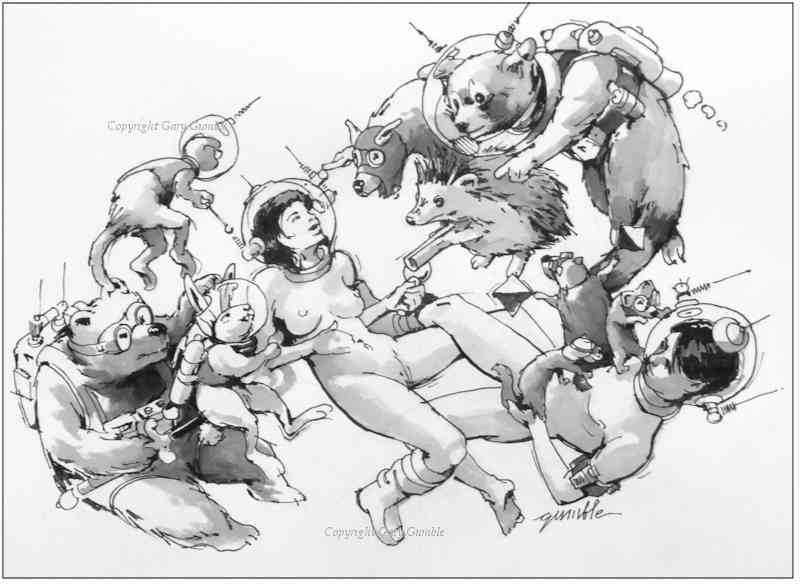
The challenge was to see if I could draw the human figures entirely from imagination. Then, during the next few months the drawing gradually grew into I’m not sure what. But, what I am sure of is that it was both challenging and fun.
My point here is that using your imagination in lots of small ways is a stepping stone toward learning how to draw anything you would ever want – even weird space animals.
If you’re interested in learning more about adding imagination to your work, you can read more about that...just Click Here.
3. See the simple shapes in your subject
The world we live in is a very complex place with “stuff” everywhere you look.
And photos don’t make our world seem any less complex.
So, in order to more easily do drawings and paintings from photos, it’s super important for an artist to learn to see simple shapes.
Because simple shapes are everywhere - in everything.
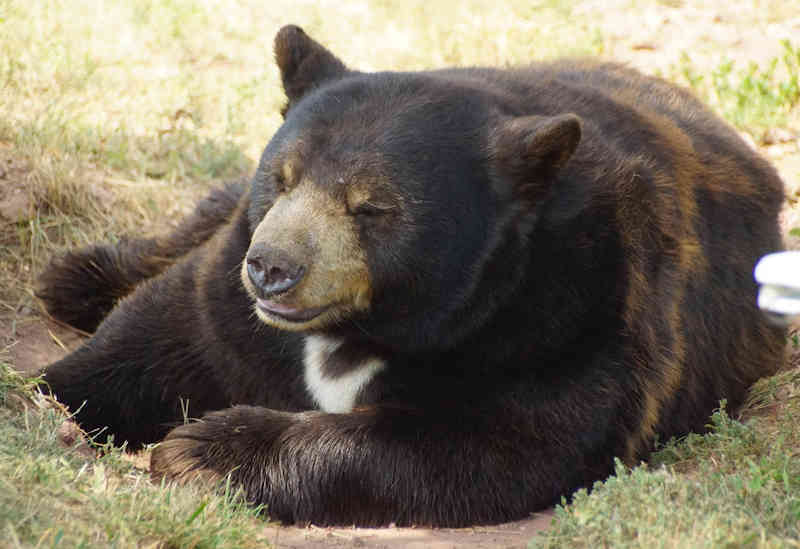
To give you just one example of what I mean, look at this bear.
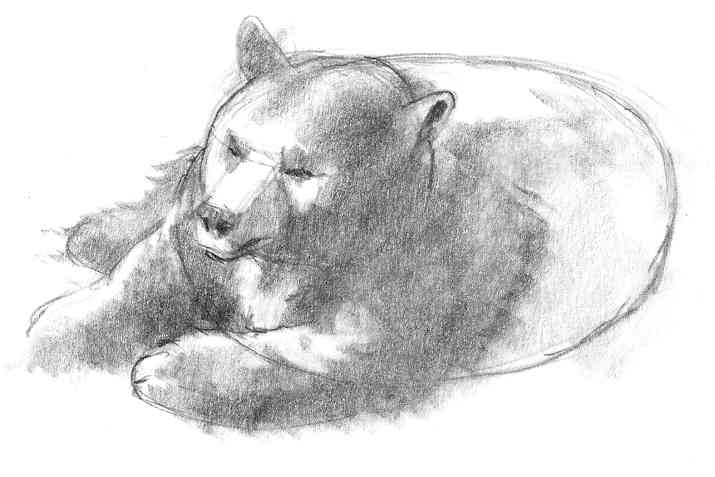
Once you learn to see its head as a simple sphere and its body as an ellipse, you can more easily draw or paint it and have it look right.
To find out more about seeing and drawing the simple shapes in this bear, click here and read Everything begins as simple shapes and click here to Learn to see like an artist
4. See proportions correctly
The simple truth is the better you train your eyes to see the correct proportions of your subject, the better chance you have of creating successful art.
Look again at the bear’s body above. All the parts of its body need to be the right size, the right shape and drawn in the right place in relation to everything else for the bear to look right.
In order to do that kind of thing consistently, artists have developed simple ways to train their eyes to see, measure and draw proportions correctly.
Because, of the 6 core drawing skills it’s one of the most necessary in learning how to draw anything you want.
You can learn to measure proportions like an artist by clicking here.
Learn to Simplify
When you look at almost anything, you see tons of little details.
But, tons of little details can make your art boring to look at and boring to do.
I began to learn that lesson in art school when I had to draw a very muscled figure drawing model named Michael.
Since I could see almost every muscle of his body, I automatically tried to put them all in my drawings. The end result was frustration...
...because I created so many boring drawings of a good model.
It wasn’t until I consciously decided to not draw every muscle I saw that my drawings of Michael improved.
Like me, you need to remember...
What you Don’t put in your drawing is just as important as what you do.
It’s your job as a developing artist to decide what will make your drawings both interesting to look at and a joy to do.
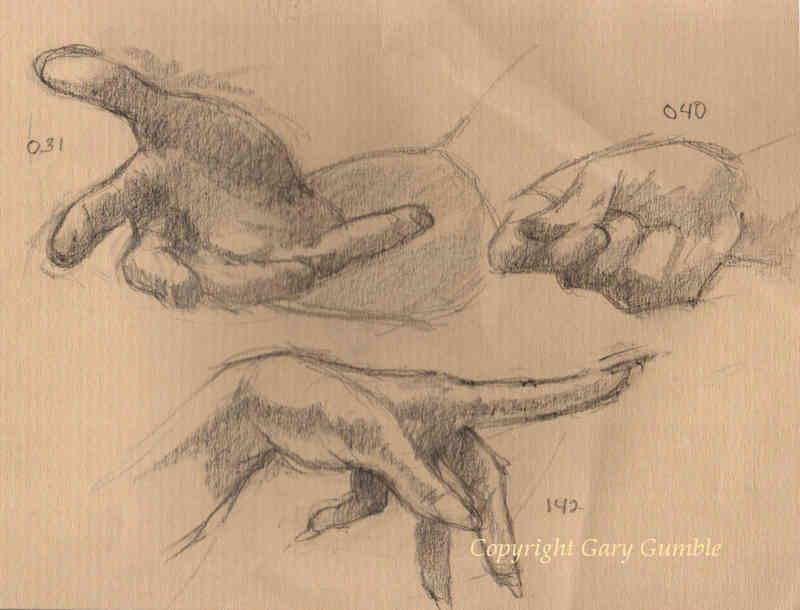
In these little drawings from one of my sketchbooks, my intention was obviously to practice drawing hands. But, the thing I absolutely didn’t want was to have these drawings turn into dull repetitive chores.
So I tried to simplify the hands and the tone on each one in a way I found interesting.
And I tried to place the hands on the page so they created an interesting composition –another one of the 6 core drawing skills. Something I will talk about next.
For now though, remember this! The whole basis of simplifying is realizing your mind doesn’t need to see every little detail in your subject to understand and ENJOY the image you create.
Click Here and Click Here to learn more about simplifying your drawings to make compelling art.
Learn to create Structure
Too often beginning artists do drawings from photos and simply reproduce whatever’s in the photograph.
For an idea to become a wonderful piece of art, the artist must create an interesting structure or arrangement of the things in the art.
In other words create an interesting design or composition. Because no camera will do that for you.
The first step in creating an interesting composition is to first ask yourself: who or what is going to be the star of your picture? What is the thing you want to be most important? The thing you want the viewer’s eyes to see first?
Then you create a structure to guide the viewer’s eyes there. Like I did in the drawiing of the “space animals” below.
Notice how your eyes always return to the woman’s head.
That’s because of the structure or design I created in this drawing. Meaning the way I arranged the animals and the man around her. And how I used light and dark values to pull you into the drawing and make the woman grab your attention.
If you can see the crucial importance of structure and all the S’s I’ve mentioned here, I will show you even more about them in my FREE 7-lesson Draw With Artist Eyes mini course.
Just click the link below to sign up and see how to start boosting your creativity and ditching more years of struggle.
 |
Copyright Gary Gumble 2026 All rights reserved About Privacy Policy Terms of Use Contact
4 Place Alexandre Laissac, 34000 Montpellier, France